

Is Direct Mail Worth It for Martial Arts Schools? The 2026 ROI Math


You've heard it: "direct mail is dead." Usually from someone selling you Facebook ads. So let's skip the argument and do the math — because for a local business like a martial arts school, the mailbox is still one of the highest-recall channels you have.
Short answer: Yes — but only as a sequence, not a single drop. According to the ANA/DMA Response Rate Report, direct mail averages around a 4.4% response rate (5–9% to existing "house" contacts) versus about 0.12% for email. Saturation mail like EDDM trades a lower response for far lower cost and no list to buy. The schools that win mail the same neighborhoods 3+ times a year — resolution season, back-to-school, and one seasonal push — and track every response with a QR code, a landing page, and a call-tracking number.
The number most owners miss
People remember mail. A neuroscience study commissioned by Canada Post (run by TrueImpact using EEG and eye-tracking) found that direct mail drives 70% higher brand recall than digital and requires 21% less cognitive effort to process. A separate U.S. study by the USPS with Temple University's Center for Neural Decision Making found physical mail held attention 118% longer than digital ads. For a school that lives and dies on a three-mile radius, that's the whole game: you don't need to reach everyone — you need to be unforgettable to the families who could actually walk through your door.
The math: what 1,200 mailers can return
Here's a realistic, illustrative example based on a typical round of about 1,200 mailers based on country wide averages.
Your numbers will shift with your offer, your close rate, and your tuition:
- Send: 1,200 households on the routes around your school
- Response at ~1.5%: ~18 inquiries (EDDM saturation typically runs below the 4.4% direct-mail average — but reaches every door on the route)
- Trials at ~45%: ~8 booked trials
- Enrollments at ~50% trial-to-member: ~4 new students
- Lifetime value at ~$2,000/student: ~$8,000 in lifetime revenue
- Campaign cost (~$1.35–$1.50/piece all-in): ~$1,620–$1,800
Counting only the first month of tuition (4 × ~$150 = ~$600), one drop recovers about a third of its cost immediately — and you're fully in the black within roughly three months of tuition. Over the student lifetime, that ~$1,700 drop returns around $8,000 in revenue — roughly 4–5× your spend. (These are planning numbers, not a guarantee — plug in your own close rate and pricing.)
Why one postcard won't fill your mats
This is the real reason mail "doesn't work" for some schools: they send once. Marketing research is consistent — people need to see a message several times before they act. One drop is a blip; the family wasn't ready that week, and the postcard's gone. The schools that print money with mail treat it as a campaign, not a coupon — the same neighborhoods, hit repeatedly across the year, until "that karate place" becomes "the karate place we're calling."
When to mail (timing beats budget)
- January — resolution season; parents are choosing activities and chasing fresh starts.
- August–September — back-to-school momentum; structured activities are already on the table.
- One seasonal push — a summer-camp or holiday drop to stay in the rotation.
A modest budget spent in the right months beats a big budget sprayed at random.
How to actually measure it (so you're not guessing)
Most schools "can't tell if mail worked" because they made it untrackable. Put three things on every piece:
- A QR code → a dedicated landing page for that offer
- A call-tracking number → so phone inquiries are attributed to the drop
- A promo code → redeemed at sign-up
Now every response is a tracked event tied to a real enrollment, and your ROI per drop stops being a feeling and starts being a number.
The takeaway
Direct mail isn't dead for dojos — one-and-done direct mail is. Right neighborhoods, right months, repeated, measured. That's the difference between "we tried postcards once" and a predictable enrollment channel you can turn up every quarter.
Frequently asked questions
Does direct mail still work for martial arts schools in 2026?
Yes. Per the ANA/DMA Response Rate Report, direct mail averages ~4.4% response (up to 5–9% to existing contacts) versus ~0.12% for email, and neuroscience studies from Canada Post and the USPS show it earns far higher brand recall — which matters most for a local, radius-based business like a dojo.
How many students will I get from one EDDM drop?
As a planning estimate: roughly 1–2% of households respond to saturation mail, ~30–50% of those book a trial, and about half of trials enroll. On a typical 1,200-home drop that's often around 4 new students — and more as you repeat to the same routes.
How much does an EDDM campaign cost?
All-in (design, print, and USPS EDDM postage) typically lands around $1.35–$1.50 per piece, so a 1,200-home drop runs roughly $1,620–$1,800.
EDDM or a targeted mailing list — which is better?
EDDM blankets entire postal routes cheaply with no list required — great for blanket awareness around your school. Targeted lists cost more per piece but reach specific households (for example, families with kids in a certain age range). Many schools use both.
When is the best time to send?
January, August–September, and one seasonal push are the highest-intent windows for martial arts enrollment.
Want the mail done for you — sequenced, designed, and tracked? That's exactly what EDDM 360 is built for. See how EDDM 360 works →
Sources: ANA/DMA Response Rate Report; Canada Post / TrueImpact neuroscience study (EEG + eye-tracking); USPS & Temple University Center for Neural Decision Making.

Leave a comment
Comments will be approved before showing up.
Also in Marketing Tips
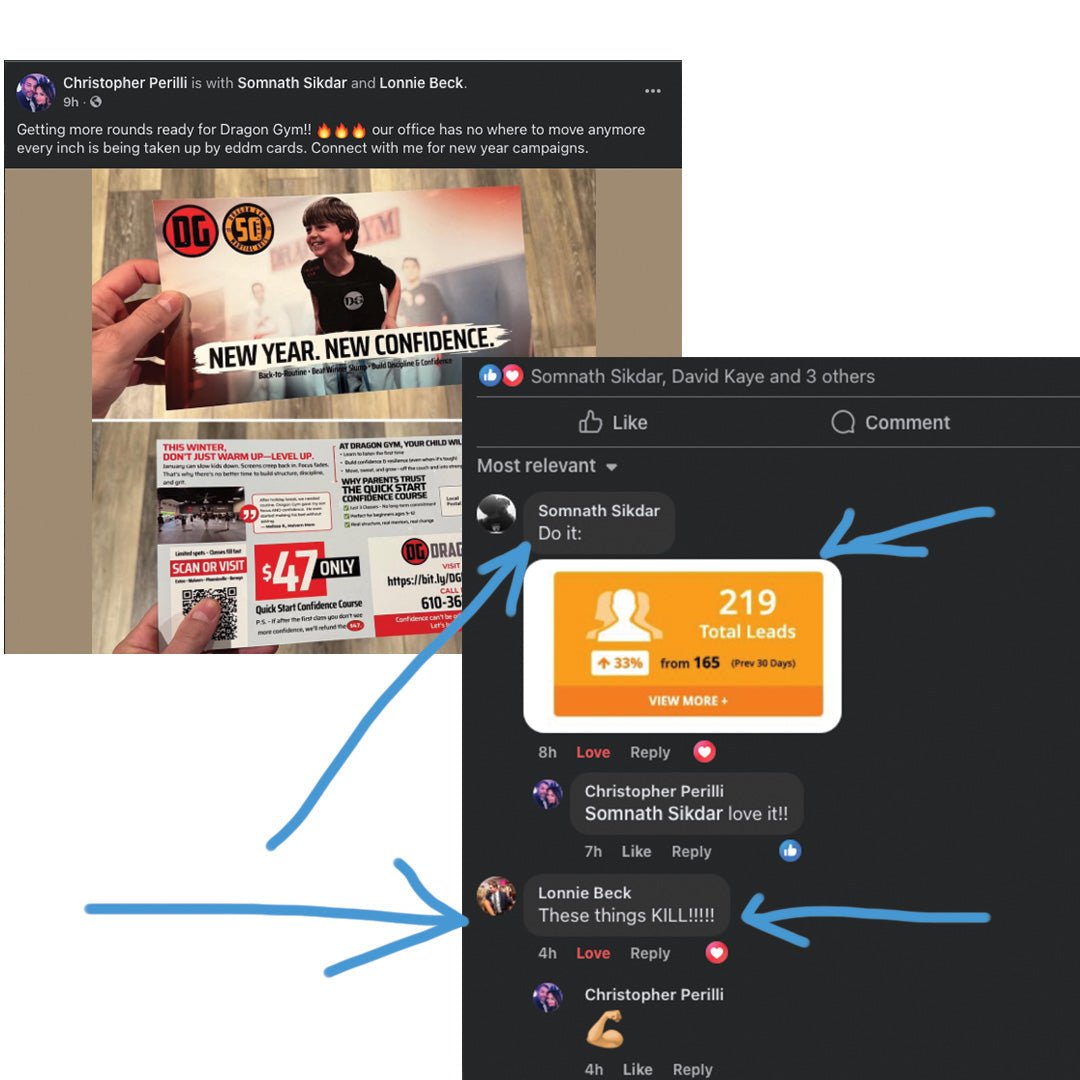

The First Card Doesn't Sell. The Third One Does.
Most schools mail one postcard, get little, and decide direct mail is dead. The real lever is frequency. Here is why the third touch converts, the honest math on reach versus repetition, and a three-drop holiday-to-January plan that fills your mat.
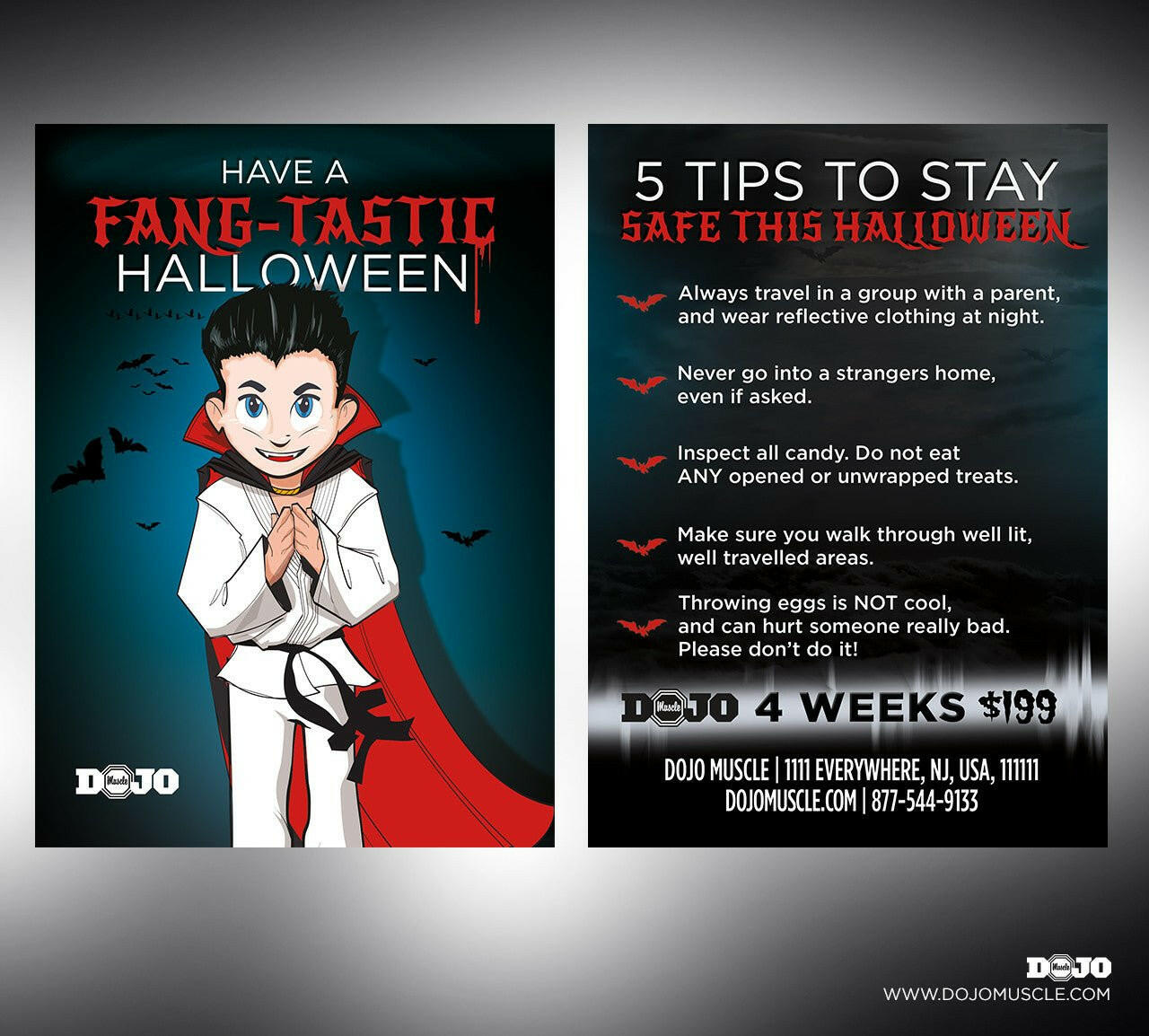

On Halloween The Whole Town Is Outside. Be Everywhere They Look.
Halloween is the one night your whole town is walking your neighborhood. Here's how to surround the same families in three places - the mailbox, the doorstep, and your storefront - with cards that give value instead of dying in a candy bucket, plus what to send by when.
Read More

Most Of Your Town Has No Idea You Exist. That Changes Now.
EDDM 360 just got its own site at eddm360.com. Here's why one postcard never works, how three drops to the same homes builds trust, how a QR dashboard finally lets you track mail, and how to start with a free route scan.
Read More