

What A Local Growth Campaign Actually Is (And Why It's Not Just "Sending Mail")
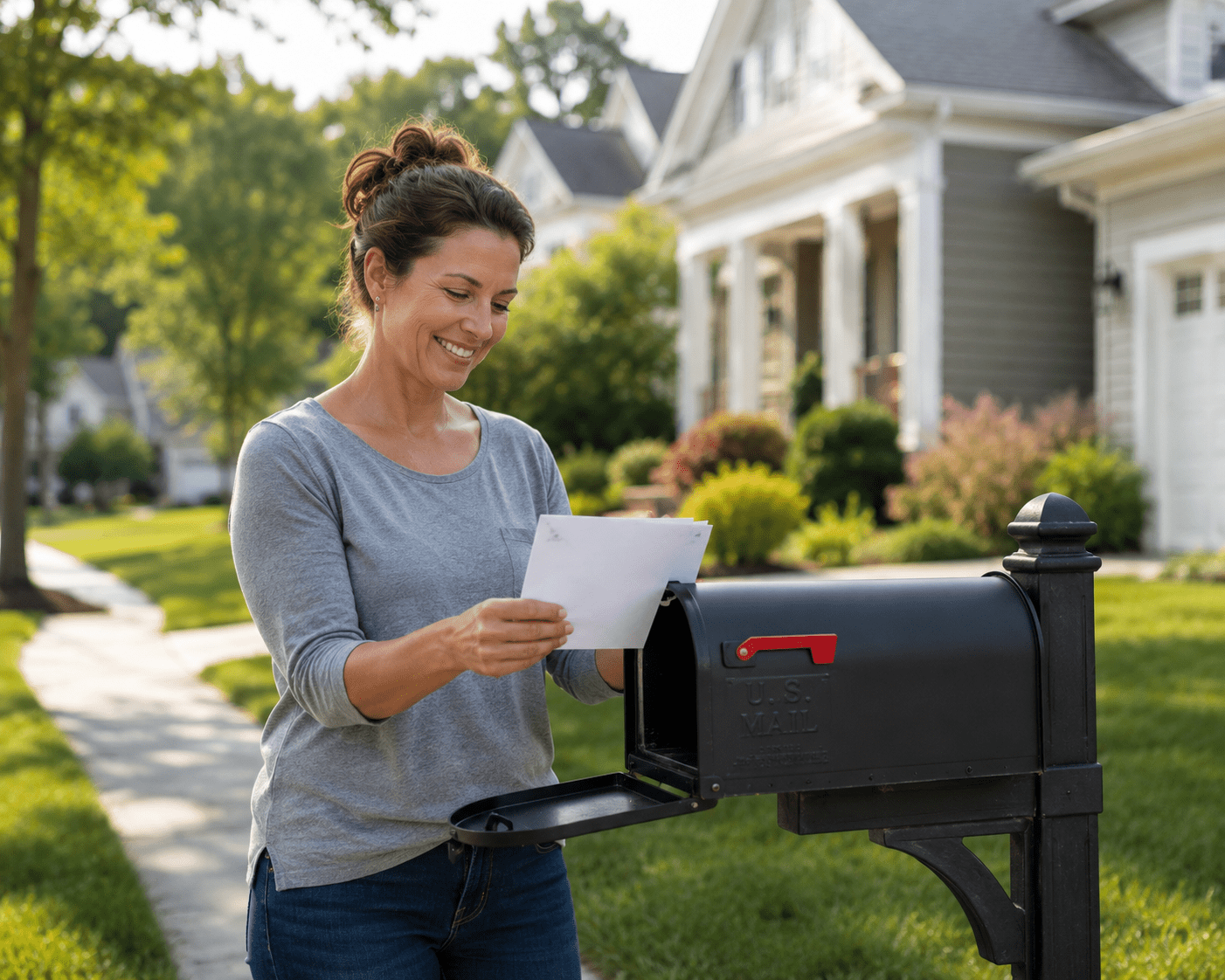

Ask ten local business owners what direct mail is, and most will give you the same answer. "Postcards. You print them, mail them, hope the phone rings."
That answer is why most direct mail campaigns underperform. And ask most of the people who walk in - if they knew you existed a few months ago.
Mail isn't a product. It's a delivery method.
The thing that actually grows a local business - whether it's a martial arts school, a med spa, a fitness studio, or any other neighborhood operation - is something different.
It's called a local growth campaign. And it's not what most owners think it is.
The shift from "lead generation" to "local growth."
For about a decade, local marketing got hijacked by the language of digital advertising.
Cost per lead. Cost per click. Cost per acquisition. Funnels. Conversion rates. Pixels.
The model assumed every dollar spent should produce a measurable inquiry within hours. Run an ad, get a click, get a form fill, follow up, close.
That model works fine for high-intent searches - someone who already knows they want what you sell and is actively looking. It doesn't work for the bigger, slower question of whether your business is even on the radar of the families and households around you.
That second question is the one that determines whether a local business grows or stalls. And that's what a local growth campaign is built to answer.
Truth is this - much of digital marketing works on a bigger scale. Nationally based brands and business do very well using Meta, and google because they have huge audiences - you living in a town of 30k rip through that audience in a week.
Also you are spending most of your money hoping your customer has their head buried in the phone, ignoring the customers on two legs walking or driving by. The people who live inside your neighborhood and go to the store near you - not people who may have been there hoping a screen - finds them.
Truth is this - much of digital marketing works on a bigger scale. Nationally based brands and business do very well using Meta, and google because they have huge audiences - you living in a town of 30k rip through that audience in a week.
Also you are spending most of your money hoping your customer has their head buried in the phone, ignoring the customers on two legs walking or driving by. The people who live inside your neighborhood and go to the store near you - not people who may have been there hoping a screen - finds them.
What a local growth campaign actually is.
A local growth campaign is a structured, multi-touch effort to make your business the recognized, trusted, top-of-mind option in a defined geographic area.
The goal isn't a lead. The goal is recognition. Exposure until you can no longer be ignored.
The mechanism is repetition - showing up enough times, in the right places, that the people in your neighborhood start to know your name without you having to explain who you are.
The delivery method is usually a mix - direct mail is the strongest single channel because it lands physically at the door, but the most effective campaigns combine mail with consistent local digital presence, community visibility, and word-of-mouth amplification.
The result is a business that doesn't have to keep chasing new leads, because the leads start showing up pre-warmed. Families call because they recognize the name. They walk in because they've driven past your sign and seen your mail. The sale is half-closed before the conversation even starts.
That's the difference between generating leads and building local awareness. The first is a transaction. The second is a position.
Why most "mail campaigns" fail.
When owners describe a failed direct mail attempt, the story usually goes like this:
"I sent out 5,000 postcards. I got two phone calls. It didn't work."
Three things are wrong with that summary.
One mailer is not a campaign. A single drop is a stranger knocking on a door. The recognition curve for direct mail starts to bend around the third or fourth consistent touch. Owners who quit after round one are quitting right before it starts to work.
Phone calls aren't the only measurement. A meaningful percentage of direct mail results show up as walk-ins, Google searches for your business name, or "I've been meaning to call you" conversations weeks later. If you're only counting QR scans and phone calls, you're missing most of the effect.
The route selection probably wasn't strategic. Mailing to "everyone around you" isn't a strategy - it's a guess. Real local growth campaigns target carrier routes filtered by household income, family composition, age density, and proximity. The same budget targeted at the right routes will outperform a wider untargeted drop every time.
A mailer is a tool. A campaign is a system. Most failed efforts confused the two.
What a real local growth campaign looks like.
A few characteristics show up in the campaigns that actually work for local businesses.
Multi-touch by design. Three rounds minimum, ideally moving into ongoing monthly visibility. The first round introduces. The second round reinforces. The third round converts the families who were waiting to see if you were still there.
Geographic precision. Not zip codes. Carrier routes - the actual mail delivery units that match real neighborhoods. Filtered by income, household size, and family density. The right thousand households outperform the wrong ten thousand.
Consistent visual identity. The same look, the same logo, the same voice across every piece. The brain recognizes patterns, not individual ads. Owners who change their design every round are starting from zero each time.
A clear, simple message. Not seven offers and three QR codes. One reason to pay attention, one reason to act, one way to respond. Cluttered mail gets thrown out faster than clean mail.
An offer that matches the audience. A summer camp offer hits families with kids. A new student trial hits adults with disposable time. The neighborhood you target should match the offer you're running.
The campaigns that work do all five of these. The campaigns that fail usually skip two or three.
What this looks like in practice for a martial arts school.
For a martial arts school specifically, a local growth campaign typically looks like this:
A defined territory - usually a 1-to-3 mile radius around the school, mapped by carrier routes and filtered for households with school-age children.
A three-round starter campaign over roughly 90 days, introducing the school, reinforcing the brand, and offering a clear reason to come in (trial class, summer camp, back-to-school program - whatever fits the season).
A decision point at the end of the starter campaign. If recognition is building, the school moves into an ongoing monthly campaign and starts to dominate the neighborhood. If not, the routes and offer get adjusted before the next round.
A complementary digital presence - a clean website, a working Google business profile, a few active social accounts. The mail introduces the brand. The digital surfaces confirm it.
That's the system. It's not flashy. It's not a hack. It's just consistent, multi-touch visibility in a clearly defined area.
The schools doing this for two or three years are usually the dominant martial arts brand in their town.
Why this matters more in 2026 than it did in 2020.
The economics of digital advertising have shifted hard in the last few years.
Average ad costs are up. Lead quality is down. The cold leads from Meta and Google are harder to close, more expensive to acquire, and less loyal once converted.
Meanwhile, the cost of physical mail has stayed relatively stable, and the inbox-to-mailbox ratio keeps tilting in mail's favor. Most people see hundreds of digital ads before lunch and four or five pieces of mail per day. The attention math has flipped.
Local businesses that build a recognition-first marketing system are spending less to grow than the businesses still chasing lead-by-lead acquisition.
That gap is going to keep widening.
A local growth campaign isn't a mailer.
It's a long-term position in your neighborhood that compounds every month you keep showing up.
The owners who treat it that way build businesses that get easier to grow over time.
The ones who keep looking for one-shot lead miracles spend the next five years chasing.


Leave a comment
Comments will be approved before showing up.
Also in Marketing Tips
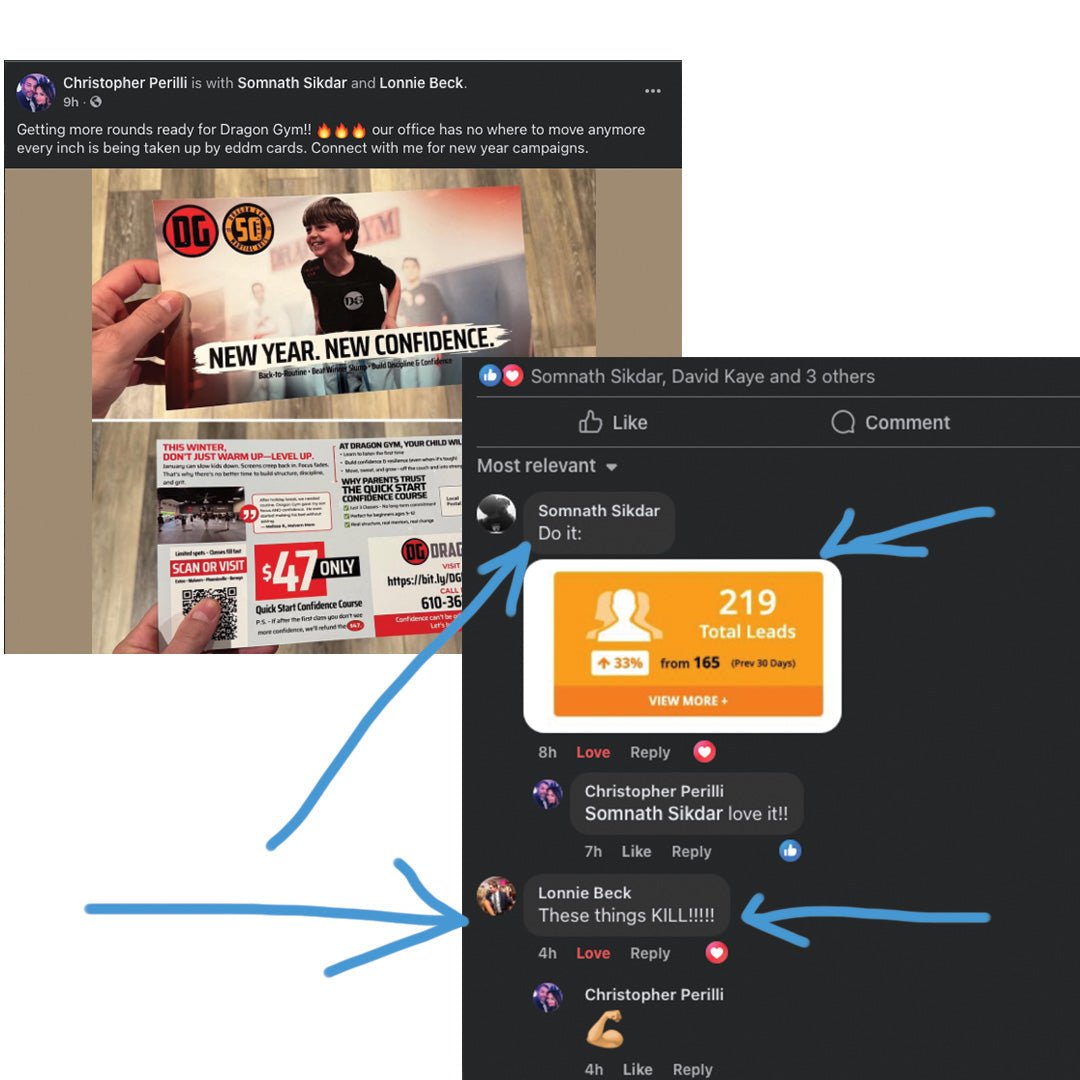

The First Card Doesn't Sell. The Third One Does.
Most schools mail one postcard, get little, and decide direct mail is dead. The real lever is frequency. Here is why the third touch converts, the honest math on reach versus repetition, and a three-drop holiday-to-January plan that fills your mat.
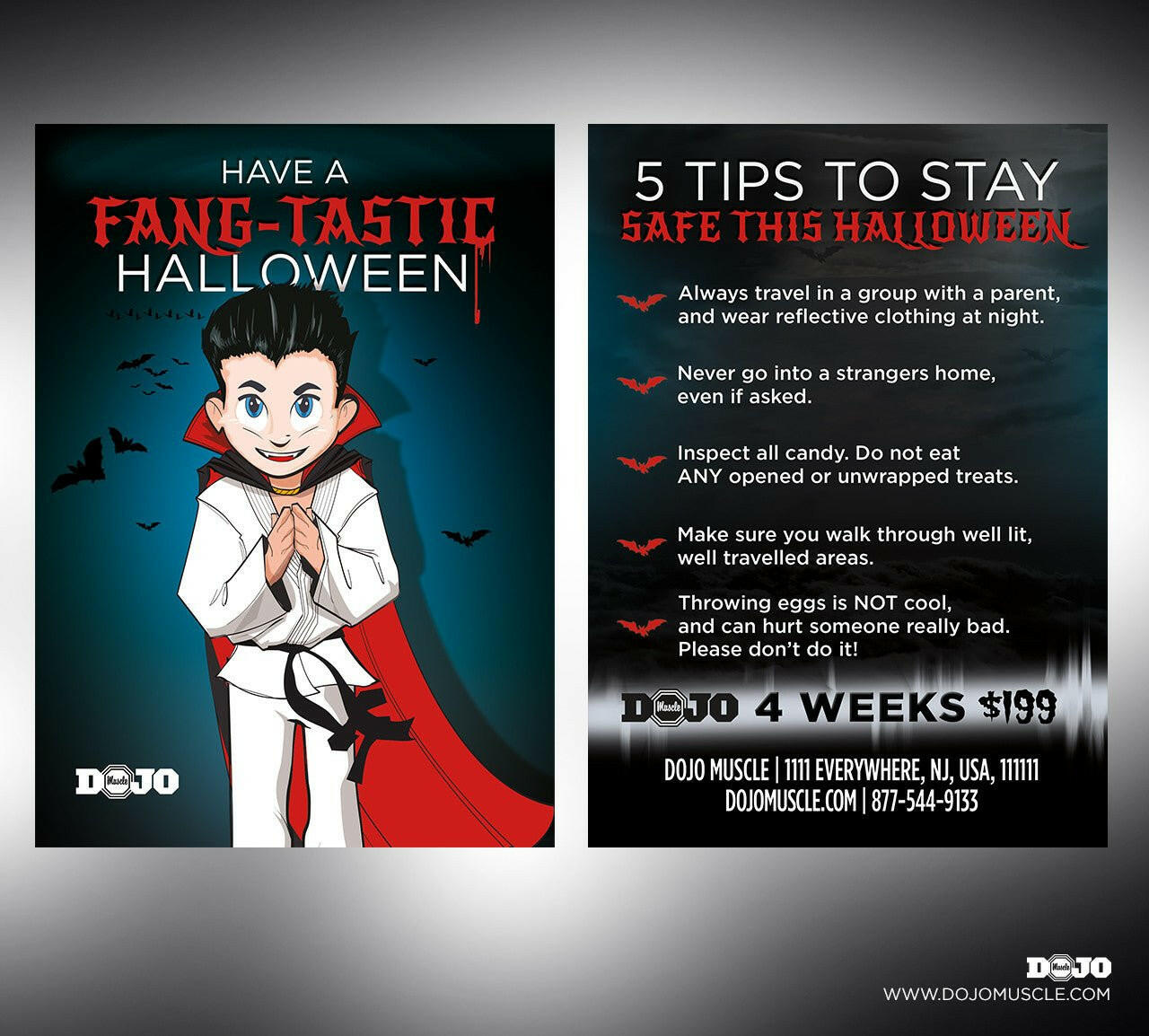

On Halloween The Whole Town Is Outside. Be Everywhere They Look.
Halloween is the one night your whole town is walking your neighborhood. Here's how to surround the same families in three places - the mailbox, the doorstep, and your storefront - with cards that give value instead of dying in a candy bucket, plus what to send by when.
Read More
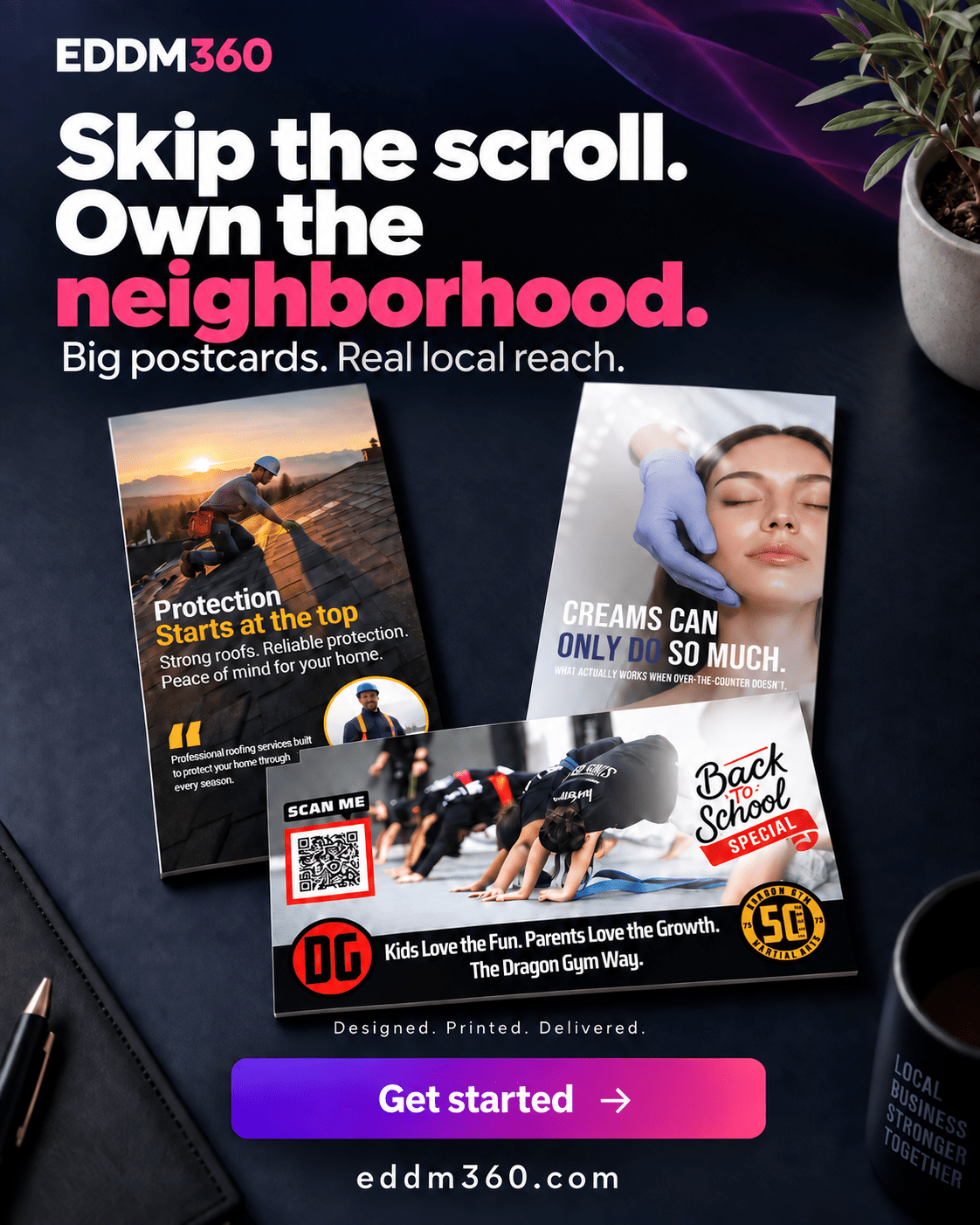

Most Of Your Town Has No Idea You Exist. That Changes Now.
EDDM 360 just got its own site at eddm360.com. Here's why one postcard never works, how three drops to the same homes builds trust, how a QR dashboard finally lets you track mail, and how to start with a free route scan.
Read More